5 Smart Investment Strategies for Beginners in 2024**
Investing can seem intimidating to beginners, but it’s one of the most powerful ways to grow your wealth. In 2024, understanding smart investment strategies is key to financial growth. Here are five strategies to get you started on the right foot:

1. **Start with Diversified Investments**
Diversification is one of the most important principles for beginner investors. This strategy involves spreading your investments across different assets—such as stocks, bonds, and real estate—to minimize risk. By diversifying, you reduce the impact of poor performance in any single asset on your overall portfolio.
Mutual funds and exchange-traded funds (ETFs) are excellent choices for beginners. These funds offer instant diversification by pooling money from many investors to buy a wide range of assets. For example, an ETF that tracks the S&P 500 index invests in the 500 largest companies in the U.S., giving you exposure to a broad swath of the market with just one investment.
2. **Long-Term vs. Short-Term Investing**
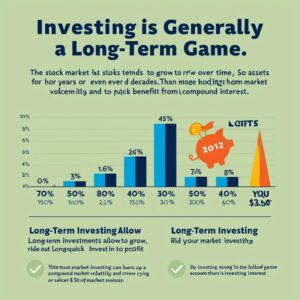
Investing is generally a long-term game. The stock market tends to grow over time, so holding assets for years or even decades can be more rewarding than trying to make quick profits. Long-term investing allows your investments to grow, ride out market volatility, and benefit from compound interest.
Short-term investments, while potentially yielding quick gains, come with higher risks and often require constant monitoring. For beginners, focusing on long-term investments can be more manageable and less stressful. The key is to choose assets that align with your financial goals and time horizon, and then stay committed to them through market ups and downs.
3. **Understand Your Risk Tolerance**
Before diving into investing, assess your risk tolerance. This is crucial for developing an investment strategy that matches your comfort level with potential losses. Risk tolerance varies based on factors like age, financial goals, and investment timeline.
Younger investors typically have a higher risk tolerance and can afford to invest more aggressively in stocks, which have higher potential returns but also greater volatility. Older investors, nearing retirement, might prefer safer, more stable investments like bonds or high-dividend stocks to preserve their capital and generate steady income.
4. **Invest in Index Funds and ETFs**
Index funds and ETFs are ideal for beginners because they provide broad market exposure with low fees. Index funds track the performance of a specific market index, such as the S&P 500, and aim to replicate its returns. ETFs, on the other hand, are traded like stocks but also track an index or sector.
Both index funds and ETFs offer a passive investment strategy that helps you avoid the complexities of stock-picking while still benefiting from market growth. They typically have lower expense ratios compared to actively managed funds, making them cost-effective choices for investors looking to build wealth over time.
5. **Dollar-Cost Averaging**
Dollar-cost averaging is an investment strategy where you consistently invest a fixed amount of money at regular intervals, regardless of market conditions. This approach helps mitigate the impact of market volatility by averaging the cost of your investments over time.
By investing a set amount regularly, such as monthly or quarterly, you buy more shares when prices are low and fewer shares when prices are high. This reduces the risk of making large investments at inopportune times and helps you build wealth steadily. Dollar-cost averaging can be especially effective with long-term investment accounts, such as retirement savings.
6. **Systematic Investment Plans (SIPs)**
Systematic Investment Plans (SIPs) are a popular way to invest in mutual funds and offer a disciplined approach to investing. With an SIP, you invest a fixed amount regularly—such as monthly or quarterly—into a mutual fund of your choice. This method combines the benefits of dollar-cost averaging with the convenience of automatic investing.
SIPs allow you to start investing with a relatively small amount, making them accessible for beginners. They also help in creating a habit of saving and investing regularly, which is crucial for long-term financial success. By investing systematically, you can benefit from compounding returns and build wealth over time, without having to time the market.
**Conclusion**
By following these investment strategies in 2024, beginners can grow their wealth steadily and achieve financial security in the long run. Diversification, understanding risk tolerance, focusing on long-term investments, and using strategies like dollar-cost averaging and SIPs can set you on the right path. Remember, investing is a journey, and starting with these smart strategies can help you navigate it successfully.
Also read about crypto currency